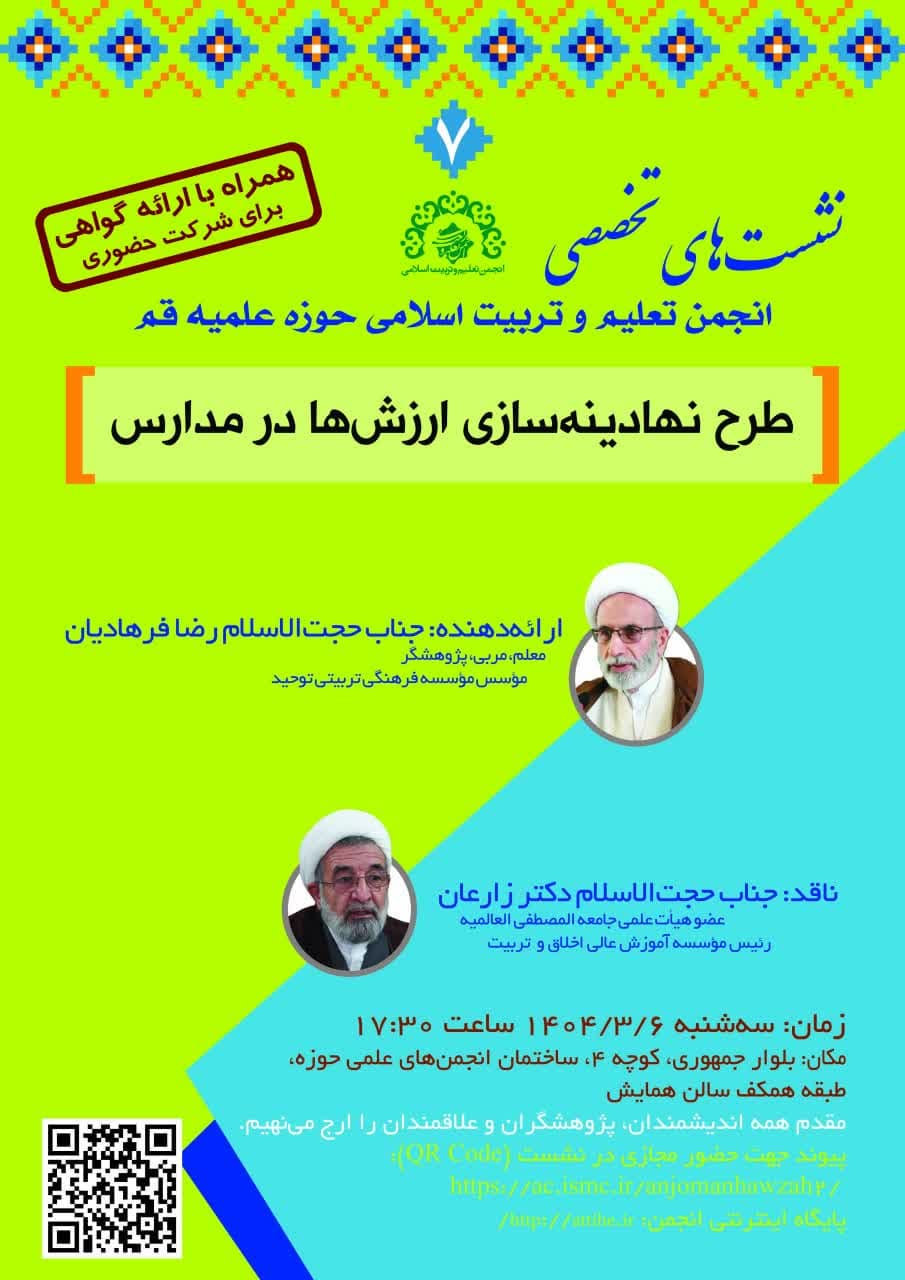
The specialized meeting "Introduction and Criticism of the Plan to Institutionalize Values in Schools" was held on June 26, 1404.
The Values Institutionalization Project is designed to strengthen the moral and educational foundations of students by teaching Islamic and humanistic principles and values in schools. This project is in line with the general goals of the Fundamental Transformation Document of Education in the Islamic Republic of Iran and is intended to help educate a generation with a religious, social, and national identity. The main goal of this project is the growth and prosperity of students not only in terms of science, but also in terms of spirituality and morality.
Project goals
The Values Institutionalization Project seeks to strengthen values such as self-awareness, responsibility, respect for ethical principles, connection with God and the Imam of the Time (peace be upon him), and promote social participation. The project aims to cultivate individuals who, in addition to academic education, have high moral and social abilities and act as effective and responsible members of society.
Field achievements
The results of the implementation of this project in various schools in the past years on a pilot basis have yielded positive reports. Students have shown high participation in activities related to the project, and the satisfaction of parents and teachers with the moral results of these activities has been very high. Also, the increase in positive social relationships among students and tangible changes in their moral behaviors have been other results of this project.
Plan implementation
The Values Inculcation Plan is designed to be implemented without disrupting the school's educational programs. The processes of this plan will be carried out by trained instructors and in collaboration with teachers in the form of training hours, counseling classes, and extracurricular activities. Therefore, school administrators will not have to worry about the compression of academic programs, and this plan will be implemented simultaneously with other school activities.
The need to train administrators and teachers
To successfully implement the values institutionalization plan, respected school principals and teachers need to participate in special training courses conducted by educational experts. These courses help principals and teachers become familiar with the principles and foundations of this plan and effectively implement it in their schools.
Introducing His Excellency Hojjatoleslam Reza Farhadian
Mr. Hojjatoleslam Reza Farhadian, a teacher, researcher and member of the Islamic Education Association of Qom Seminary, was born in 1948 in Hamedan. He began his education in his hometown and after obtaining a degree from Tehran University of Science and Technology and being accepted into the field of academic counseling and guidance at the Higher School of Tehran, due to his interest in education and Islamic teachings, he entered the Teacher Training University and was employed in education in 1973 .
During his years of service in education, Farhadian has been engaged in studying and studying seminary courses and has played an effective role in advancing the goals of education. In 1988, he was appointed as a member of the Headquarters for Fundamental Change in the Education System and collaborated in formulating the philosophy of education and drafting the fundamental plan for changing the education system.
With the establishment of the Tohid Educational Cultural Institute and Complex in 1990 , Farhadian has worked to advance the goals of Islamic education and, based on his years of activity and educational experience, has designed and implemented a plan to institutionalize values from preschool to high school, taking into account the document of transformation. He has also authored more than thirty books and numerous articles in the field of education, some of which have been published many times.
This plan and efforts of Mr. Hojjatoleslam Farhadian demonstrate a strong determination to improve the level of Islamic education in the country.


