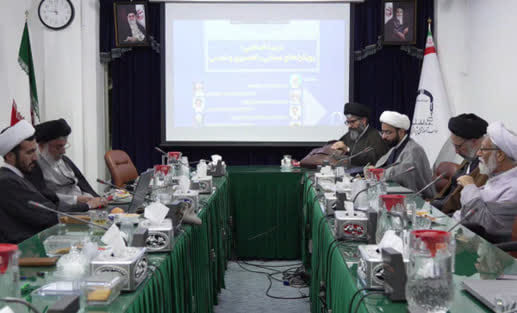
The 16th pre-conference in the series of pre-conferences of the "International Conference on Islamic Humanities" entitled "Islamic Education; A Basic, Interpretive, and Civilizational Approach" was held by the Educational Sciences Department of the Imam Khomeini Educational and Research Institute (RA).
According to the public relations department of the Imam Khomeini Educational and Research Institute (RA), the 16th pre-conference in the series of pre-conferences of the "International Conference on Islamic Humanities" entitled "Islamic Education; A Basic, Interpretive and Civilizational Approach" was held at the Imam Khomeini Educational and Research Institute (RA) by the Educational Sciences Department of the Imam Khomeini Educational and Research Institute (RA), in cooperation with the Islamic Education and Training Association of the Seminary, the Qadr Think Tank, and the Supreme Council of the Cultural Revolution.
In this scientific meeting, Hojatoleslam Mohammad Alamzadeh Nouri, Hojatoleslam Mohammad Javad Zarean, Hojatoleslam Ali Naqi Faqihi, Hojatoleslam Seyyed Ahmad Rahnami, Hojatoleslam Seyyed Mohammad Sadeq Mousavinasab, Hojatoleslam Hadi Razzaqi, and Hojatoleslam Seyyed Naqi Mousavi delivered speeches.
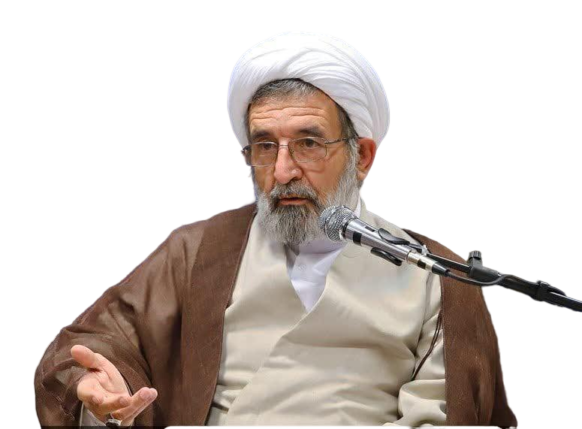
Hojjatoleslam Mohammad Javad Zarean, the head of the seminary association dedicated to examining educational networks and middlemen, presented his views.
Emphasizing the difference between Islamic educational networks and purely technical and administrative networks, he said: The educational network should be more spiritual and humane, and the instructor plays a central role in it. The concept of educational guardianship in this framework has a two-way nature and includes mutual enjoining of good and forbidding of evil between the instructor and the student.
Referring to marital relationships, the head of the Institute of Higher Education for Ethics and Education also stated: Men and women have an educational effect on each other, and concepts such as cultivation, guidance, and growth should pave the way for mutual education.
Hojjatoleslam Zarean clarified: "The nature of education is not simply communication, but a special type of communication that includes characteristics such as dominance, authority, love, and submission. Even in secular education, there are elements of guardianship, with the difference that in the Islamic model, this guardianship has divine legitimacy and is consistent with moral and educational values."
He also pointed out the difference in views among researchers and theorists of Islamic education after the revolution and said: "It is necessary to define indicators that determine whether a theory or viewpoint is within the framework of Islamic education or outside it."
Hojjatoleslam Zarean continued: "Islamic education should be used not only in theory, but also in practice in the country's society and educational system. Theories of Islamic education should be based on Islamic teachings and verses of the Quran to prevent incorrect perceptions."
In conclusion, he emphasized: The design of the Islamic education system must be carried out according to the operational needs of society and the educational system, and with the efforts of researchers and sympathizers, so that a comprehensive and practical model is formed in this field.
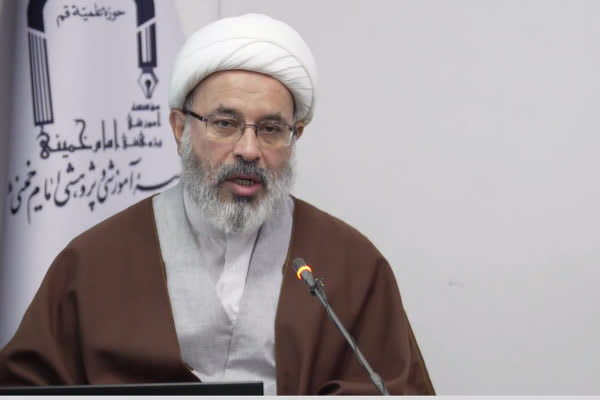
Emphasizing the importance of ethics, Hojjatoleslam Mohammad Alamzadeh Nouri introduced it as the science of expressing values and distinguishing between good and bad, right and wrong, good and bad, virtue and vice, and added: Throughout history, ethics scholars have always sought to explain the system of human values, and each ethical proposition has its own subject and predicate, which express values and anti-values.
Referring to the long history of moral concepts in historical works, he recalled that similar concepts such as good and bad, right and wrong, piety and immorality, good and bad, obedience and disobedience have been raised in the Quran and the hadiths of the Prophet Muhammad (PBUH).
Hojjatoleslam Alamzadeh stated that the Holy Quran's outstanding point in this regard is the creation of a threefold moral division, saying: "In addition to the conventional duality of good and evil, the Holy Quran has added a third dimension to morality."
He continued: "This action of the Quran, in addition to establishing the traditional duality of values, draws the audience's attention to the third dimension of morality and reflects Islam's creative and educational outlook in the field of morality and education."
Referring to the blessed Surah Al-Waqah, he added: "In this Surah, God divides people into three groups; the first group is the Companions of the Messenger of Allah, who enjoy prosperity and happiness and are considered among the good people of the world; the second group is the Companions of the Messenger of Allah, who are destined for misfortune and calamity; and the third group is the Saqabiyun or the pioneers, who are very far from the other good people and are introduced as the close ones."
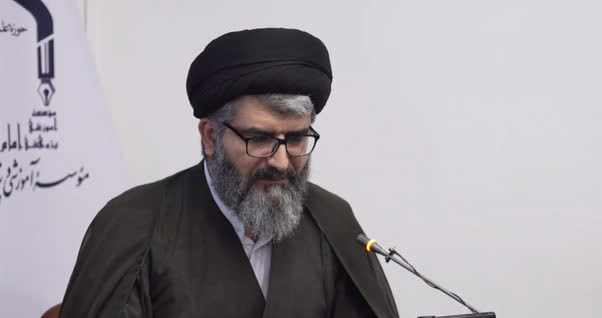
Hojjatoleslam Seyednaghi Mousavi, Vice President for Research at Farhangian University, presented his views on the topic of "An Explanation of the Educational Patronage Network with an Emphasis on the Middle Circles." Emphasizing the importance of the social, political, and international aspects of the formal education system, he referred to the issue of educational governance and the distribution of authority in education.
Referring to current issues in education, including crises and "educational Ukrainian" approaches, Hojjatoleslam Mousavi emphasized the necessity of addressing these issues with indigenous jurisprudential and philosophical perspectives.
According to him, the Islamic educational governance model has characteristics, the most important of which are networking and border activism, or the “middle links of education.” Within this framework, the goal of this model is to share educational authority and strengthen the authority and legitimacy of authority in the education process.
A faculty member of the Department of Educational Sciences at Farhangian University, he considered education to be a continuous and humane connection between teacher and student, and stated: Islamic philosophy views this connection as a bond between two souls with moral and guiding characteristics.
He also defined education in the form of guardianship and, referring to Quranic literature, considered educational guardianship to include love, responsibility, and guidance that has moral, institutional, and spiritual functions.
Hojjatoleslam Mousavi emphasized: From this perspective, educational communication is not only an educational process, but also a foundation for the formation of educational governance and the strengthening of human networks among educational actors.
Continuing his discussion, he explained that the educational relationship between teacher and student can be considered a type of guardianship, but this guardianship is not exactly the same as concepts such as teacher authority or authority and sanctity, but rather is related to them on a general and general level.
A faculty member of the Department of Educational Sciences at Farhangian University, citing Islamic educational jurisprudence, explained the longitudinal and transverse axes of this guardianship. In the longitudinal dimension, the responsibility for raising a child lies with the parents, paternal grandparents, and other related circles, extending to the ruler of the nation. In the transverse dimension, the institution of the family, the institution of religious scholars, and the institution of the people simultaneously play a role in the education process.
Emphasizing that in Islamic jurisprudence, education always has a guardian and no situation allows for abandonment of educational responsibility, he added: "Given this longitudinal and transverse relationship, the necessity of networking education in Islamic society becomes clear. Unlike secular models that examine the distribution of educational authority and influence only from a technical and horizontal perspective, in the Islamic model, education is always linked to guidance and sacred values, and its networking is carried out with a divine and moral perspective."
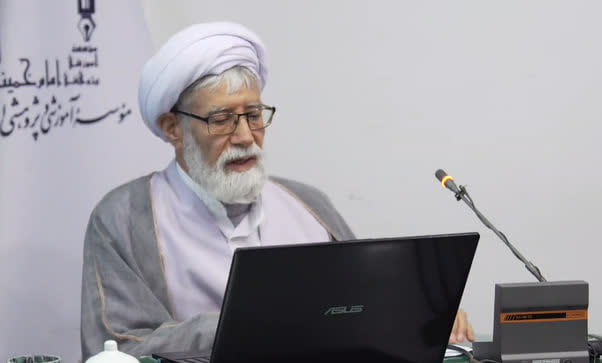
Hojjatoleslam Ali Naghi Faqihi, associate professor of the Department of Educational Sciences at Qom University, emphasized the importance of human nature as the foundation of Islamic education with a fundamental, interpretive, and civilizational approach.
Recalling the position of Allama Misbah (may Allah have mercy on him), he said: "Islamic education, based on the Quran and narrations, is based on human nature, and this nature can have great civilizational effects. Nature is the foundation of universal and human education and is not limited to a particular society or time."
Hojjatoleslam Faqihi added: "An important characteristic of nature is that human innate perceptions can be understood with direct knowledge, and God has inspired in human nature the knowledge of good and evil. This issue is an important criterion for jurists in determining the correctness of rulings; if the ruling is consistent with human nature, the inference is correct, and if it is not consistent, it will be incorrect."
He emphasized: "Given this basis, Islamic education must be formed based on human nature so that it pays attention to the inherent characteristics of humans and can educate faithful and virtuous people and lay the foundation for Islamic civilization."
Stating that the characteristics of human nature are always constant and indestructible, Hojjatoleslam Faqihi said: "Recognizing nature allows us to evaluate whether the laws and regulations presented by different societies are humane and conducive to happiness. If nature is recognized correctly, the most beneficial sciences in the field of education have been obtained."
He added: "Nature is the basis of all principles and foundations of education, and its relationship with educational goals, methods, and techniques illuminates the correct educational path. Every goal, every principle, and every method must come from the good mine of human nature so that the education system is correct and complete."
Hojjatoleslam Faqihi further stated, citing the hadith of Imam Sadiq (a.s.), that: All principles and branches of education must be in harmony with the good human nature, and if this harmony is not maintained, the educational system will be incomplete. Therefore, nature is the main criterion for distinguishing the norm from the abnormal and the good from the bad.
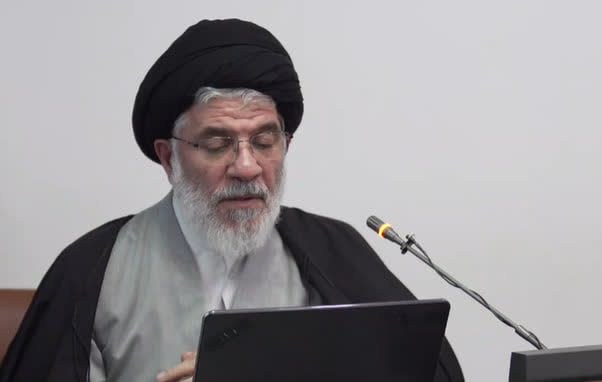
Hojjatoleslam Seyyed Ahmad Rahnami, a member of the Education and Training Group of the Imam Khomeini Institute (RA), explained the potential of Islamic educational philosophy in the process of civilization, emphasizing the thoughts and works of the late Allamah Misbah Yazdi.
Referring to the numerous works of Allama Misbah, he said: "In every intellectual system, educational philosophy plays a key role in the process of building civilization, and its principles and theories must pave the way for educating individuals who can create and sustain civilization."
Hojjatoleslam Rahmani added: From the perspective of Allama Misbah, the political education system of Islam has a high potential for creating and expanding Islamic civilization, and the function of this system is very effective in building a new global civilization.
He emphasized: "The education system must go beyond short-term goals and educate generations who are capable of creating civilization with the necessary knowledge, authority, and capability. This vision must be pursued from kindergarten to university and the general community."
A member of the Education and Training Group of the Imam Khomeini Institute (RA), referring to the importance of Islamic education in creating active and civilization-building generations, said: Education should prepare not only for life in society but also for effective activism towards the advancement of civilization. The main goal is to educate an active and humane individual who can play an effective role in building global civilization.
Hojjatoleslam listed the seven key components of the civilization-building educational philosophy and emphasized: These principles can determine the path to educating faithful, creative, and pioneering people.
He considered these components to include paying attention to the ultimate perfection of man and divine proximity, creating a relationship between ethics and science and combining knowledge with spirituality, combining education with Islamic and human values, the role of family and society in the education process, teaching management and leadership abilities at the individual and macro levels, promoting critical and creative thinking with an innovative approach, and the role of leadership of the guardianship, especially under the leadership of the Supreme Leader, in guiding and guiding civilization.
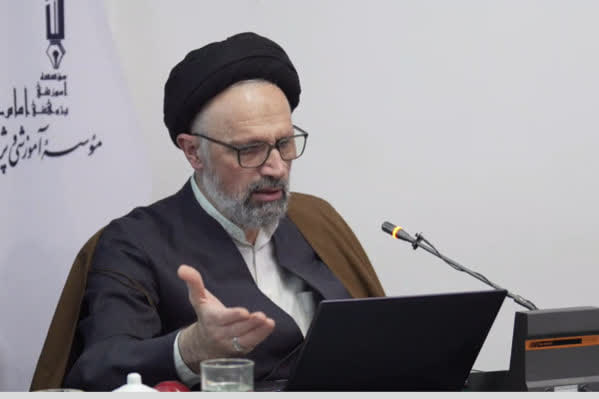
Hojjatoleslam Seyyed Mohammad Sadeq Mousavinasab, Director of the Educational Sciences Department of the Imam Khomeini Educational and Research Institute, presented a discussion entitled "Epistemological Critique of Constructivism Theory" in Learning and examined and criticized this theory from the perspective of educational anthropology.
Stating that learning theories have moved beyond behaviorism and cognitivism and today have mainly led to constructivism, he stated: Constructivism theory, as the last dominant theory in the field of learning, has had a wide impact on educational psychology and educational methods, and many of today's educational and training implications, especially the exploratory teaching method, are based on this epistemological basis.
Emphasizing that the acceptance of any teaching method depends on the acceptance of its theoretical foundations, Hojjatoleslam Mousavinasab added: When traditional methods are abandoned and the heuristic method is recommended, this change is based on the acceptance of the epistemological assumptions of constructivism; therefore, it is necessary for these foundations to be carefully analyzed and criticized.
He considered this discussion related to educational anthropology and stated: "The constructivist theory is not limited to the field of learning, but is also linked to anthropology in education, and therefore, its study is of fundamental importance."
Referring to the historical background of this view, the professor of education said: "The early traces of constructivism can be seen in the idealistic thoughts of philosophers such as Plato, Socrates, and Aristotle; a view that sometimes does not recognize any truth beyond human subjective perceptions. However, the new formulation of this theory was formed with the works of Piaget, Vygotsky, and Gestalt psychology."
He considered constructivism to be a product of Piaget's cognitive theory and added: "Since the 1970s and 1980s, especially in science education, social constructivism, especially its radical form, has become the dominant theory and has gradually been instilled as if there were no other alternative in education."
Referring to Ernst von Glasers' famous definition, Hojjatoleslam Mousavinasb said: "In this view, knowledge is considered something constructed by the individual and the result of his interaction with the environment. Based on this basis, meaning and knowledge are the result of individual experiences, and a truth independent of the mind is not assumed for what is formed in the mind; this is the focal point of radical constructivism that requires serious criticism."
He added: "In some constructivist interpretations, the question is raised: Who said there is truth outside? These types of statements are very sensitive and decisive, and it is necessary to adopt a clear scientific and epistemological position towards them."
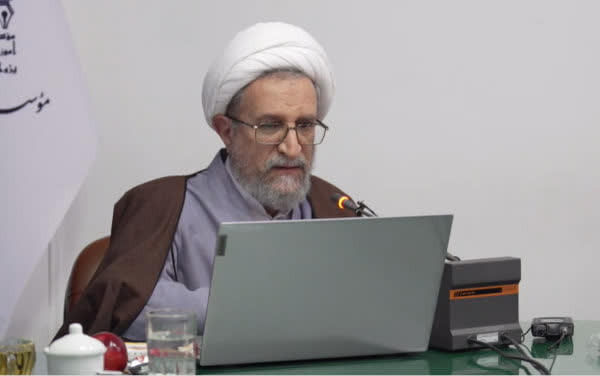
Hojatoleslam Hadi Razzaqi, a member of the educational group of the Imam Khomeini Educational and Research Institute (RA), spoke at the 16th pre-conference of the International Conference on Islamic Humanities, which was held today at the Imam Khomeini Educational and Research Institute (RA), on the topic of the necessity of understanding the common humanities as a necessary condition for producing Islamic humanities, stating that this discussion requires a more detailed discussion, and noted: In order to produce Islamic humanities, the relationship between these sciences and their epistemological foundations must be carefully examined. The main question is whether it is possible to produce Islamic humanities without understanding the common humanities, simply by referring directly to Islamic sources.
He added: "Those who emphasize the necessity of understanding existing humanities have arguments that must be examined systematically; it must also be clarified at what level and to what extent this understanding is necessary."
A member of the educational group of the Imam Khomeini Educational and Research Institute (RA) considered one of the most important reasons for the necessity of understanding current humanities to be accurate problem-solving, and said: "If we want to correctly identify and understand the problems of the humanities, we are bound to have a deep familiarity with existing humanities." This problem-solving can be proposed in at least two senses.
In explaining these two meanings, he stated: First, in the existing humanities, numerous issues have been raised that have basically never been encountered in religious knowledge or in our traditional mental space. These issues have engaged human society today, and anyone who intends to produce Islamic humanities must recognize these emerging questions, understand their limits, and analyze their epistemological position.
Referring to examples of these issues, Hojjatoleslam Razzaqi added: "In the field of psychology, especially in the behaviorist approach, which is one of the most widespread and influential schools in the scientific environment, numerous concepts and issues have been formed that continue to have an active presence in the world's educational and training systems."
He continued: "Concepts such as motivation, conditioning, reward, and punishment are among the topics whose precise understanding is essential for any researcher who intends to produce Islamic humanities. If these concepts and their limits are not properly understood, our encounter with them will be crude, immature, and unrealistic."
A member of the educational group of the Imam Khomeini Educational and Research Institute (RA) emphasized: Otherwise, the researcher may speak in an isolated and closed space, while the scientific and educational space of society is heavily influenced by these same concepts and theories, and ignoring them shows that we have distanced ourselves from the text of scientific reality.


